





.svg)
.svg)
.svg)
.svg)

.svg)
.svg)
.svg)

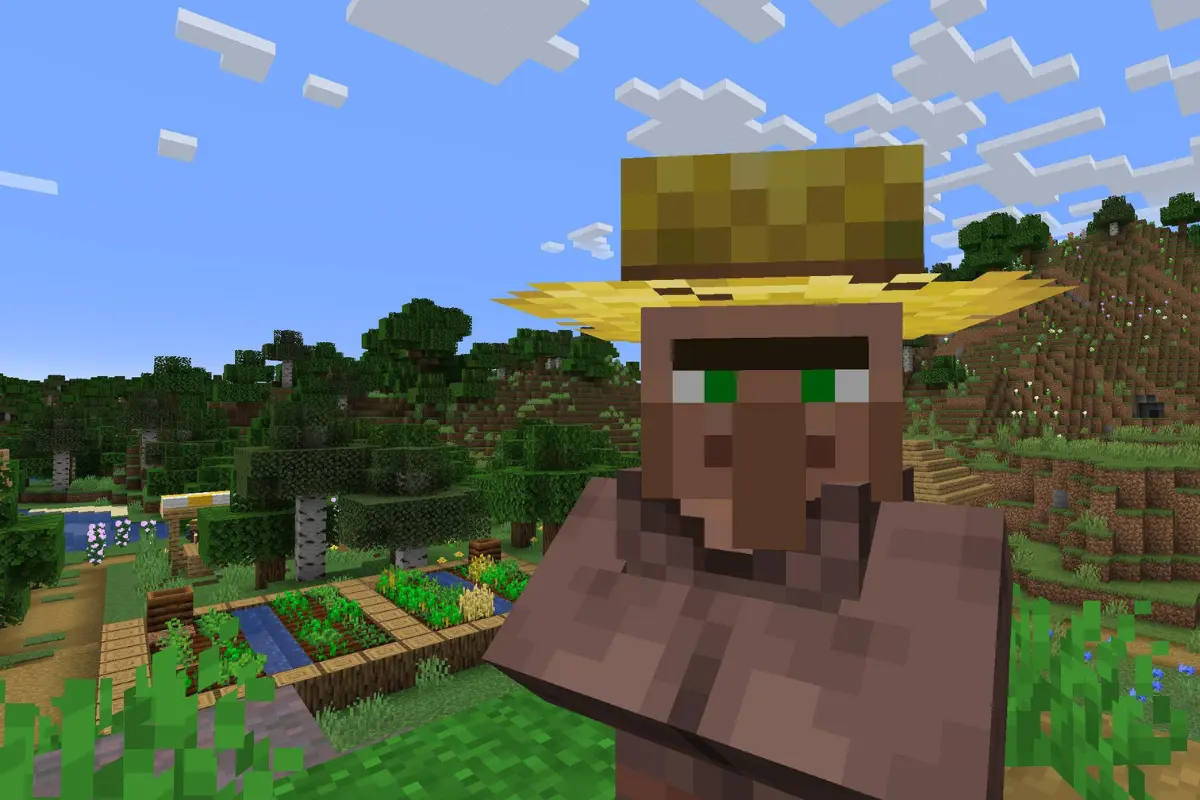
You found a village. You walked through. Maybe stole a bed. Maybe pushed a guy into a hole by accident. But did you know these blocky little guys can actually make you rich?
Villager trading isn’t just a side thing — it’s how you get emeralds, enchanted gear, XP, and a reliable source of rare items. If you know what you're doing, that is.
Let’s break it all down.
What villager trading is
Villagers have professions. Each one offers different trades. You give them items (like crops or emeralds), they give you useful stuff (like enchanted books, tools, armor, or gear).
Trading helps you:
- Get rich (hello, emeralds)
- Score top-tier enchantments
- Farm infinite XP
- Automate resource flow
- Look like a genius in multiplayer
Step 1: Find or create a village
Villages spawn in:
- Plains
- Desert
- Savannah
- Taiga
- Snowy biomes
If you can’t find one? You can build your own “village” by placing beds and workstations, then curing zombie villagers (advanced tactic).
Pro tip:
Fence the place off. Zombies love villager snacks.
Step 2: Understand villager professions
Each villager has a job based on a nearby workstation block. No workstation = unemployed. Unemployed = your opportunity.
Here are some key professions:
| Profession | Workstation | Notable Trades |
|---|---|---|
| Farmer | Composter | Crops for emeralds |
| Librarian | Lectern | Enchanted books (like Mending!) |
| Fletcher | Fletching Table | Sticks for emeralds, arrows |
| Toolsmith | Smithing Table | Enchanted tools |
| Armorer | Blast Furnace | Enchanted armor |
| Cleric | Brewing Stand | Redstone, Ender Pearls |
| Cartographer | Cartography Table | Maps, banners |
Changing jobs:
- Break the workstation = job gone
- Place a new workstation near an unemployed villager = new profession
- Once they’ve been traded with, they’re locked into that job
Step 3: Level them up (and unlock the good stuff)
Villagers have five career levels:
- Novice
- Apprentice
- Journeyman
- Expert
- Master
As they level up (via trading), they unlock better trades. For example:
- Librarians may start with Luck of the Sea, then unlock Mending
- Farmers begin with wheat trades, then offer golden carrots
Pro tip:
Always check the first trade before locking in. If it’s trash, break the workstation and try again.
Step 4: Optimize your trades (and go infinite)
Here’s how to get rich:
- Farmer + carrot/potato farm = infinite emeralds
- Fletcher + stick trade = infinite emeralds
- Librarian + book trades = infinite enchanted books
Trade loops:
- Farm crops → trade with Farmer → get emeralds
- Use emeralds → buy gear from Toolsmith, Armorer, or Librarian
- Repeat forever
Some players build entire villager trading halls — rows of job-locked villagers in tiny rooms with workstations. It’s weirdly efficient (and mildly dystopian).
Step 5: Reduce trade costs
Want discounts? Save their lives.
How to do it:
- Find a zombie villager
- Trap them (name tag helps)
- Splash with Weakness potion
- Feed them a Golden Apple
- Wait for them to cure
Cured villagers give you massive discounts (sometimes 1 emerald → 1 enchanted book).
Repeat the process, and you’ve got basically free gear.
What to avoid
- Don’t trap villagers in boats forever — they need to sleep and work
- Don’t block their beds or workstations
- Don’t trade junk constantly — they run out of stock
- Don’t let zombies in — seriously, fence the place
Now, build your empire
Villager trading is a full-on business strategy in Minecraft. With a little patience and planning, you can build an enchanted gear pipeline that runs 24/7 with no mining required.
So next time you see a village? Don’t ignore it. Capitalize on it.
Need a server where you and your friends can build the ultimate villager trading hall without lag or mob interference? LumaDock servers are perfect for your economic ambitions.