





.svg)
.svg)
.svg)
.svg)

.svg)
.svg)
.svg)


With ispmanager now available as part of LumaDock’s VPS offering, it’s worth taking a closer look at what the control panel actually does and how it fits into real hosting environments.
So what is ispmanager?
ispmanager is a modern hosting control panel designed for Linux servers. It provides a structured way to manage websites, domains, databases, email, DNS, SSL certificates, users, backups and server services from a single interface, while still running on your own virtual server.
As an official licensed ispmanager partner, LumaDock integrates the panel directly into its VPS platform, so the software layer and the infrastructure layer work together from day one.
What ispmanager is designed to solve
VPS hosting gives you isolation, predictable performance and full system access. What it does not give you is structure. Once a server hosts more than one website or service, everyday operations quickly become repetitive and error-prone.
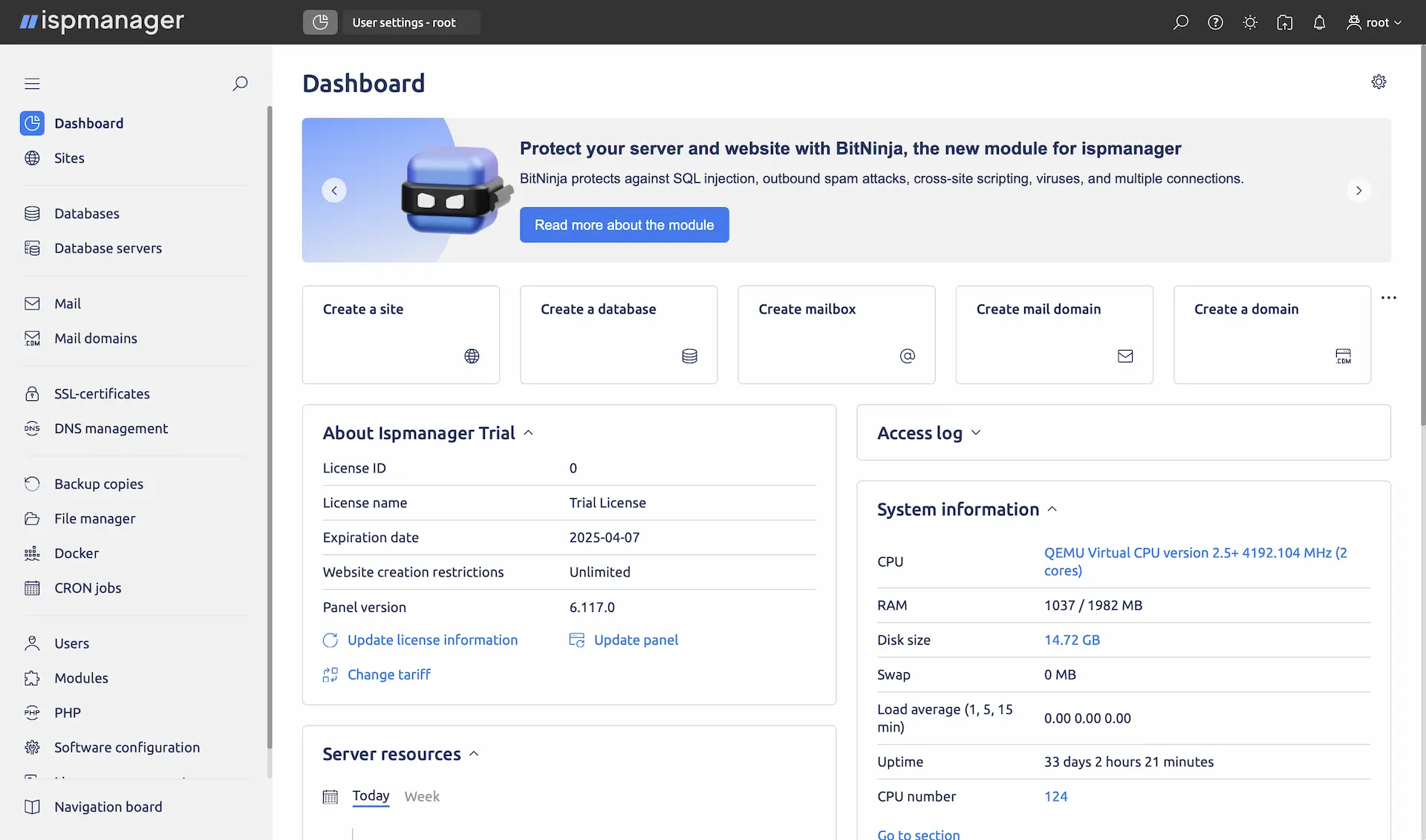
ispmanager addresses this by organising hosting tasks into clear sections and workflows. Instead of configuring each component separately, you manage everything through a single control panel that keeps services consistent as the environment grows.
Website and domain management
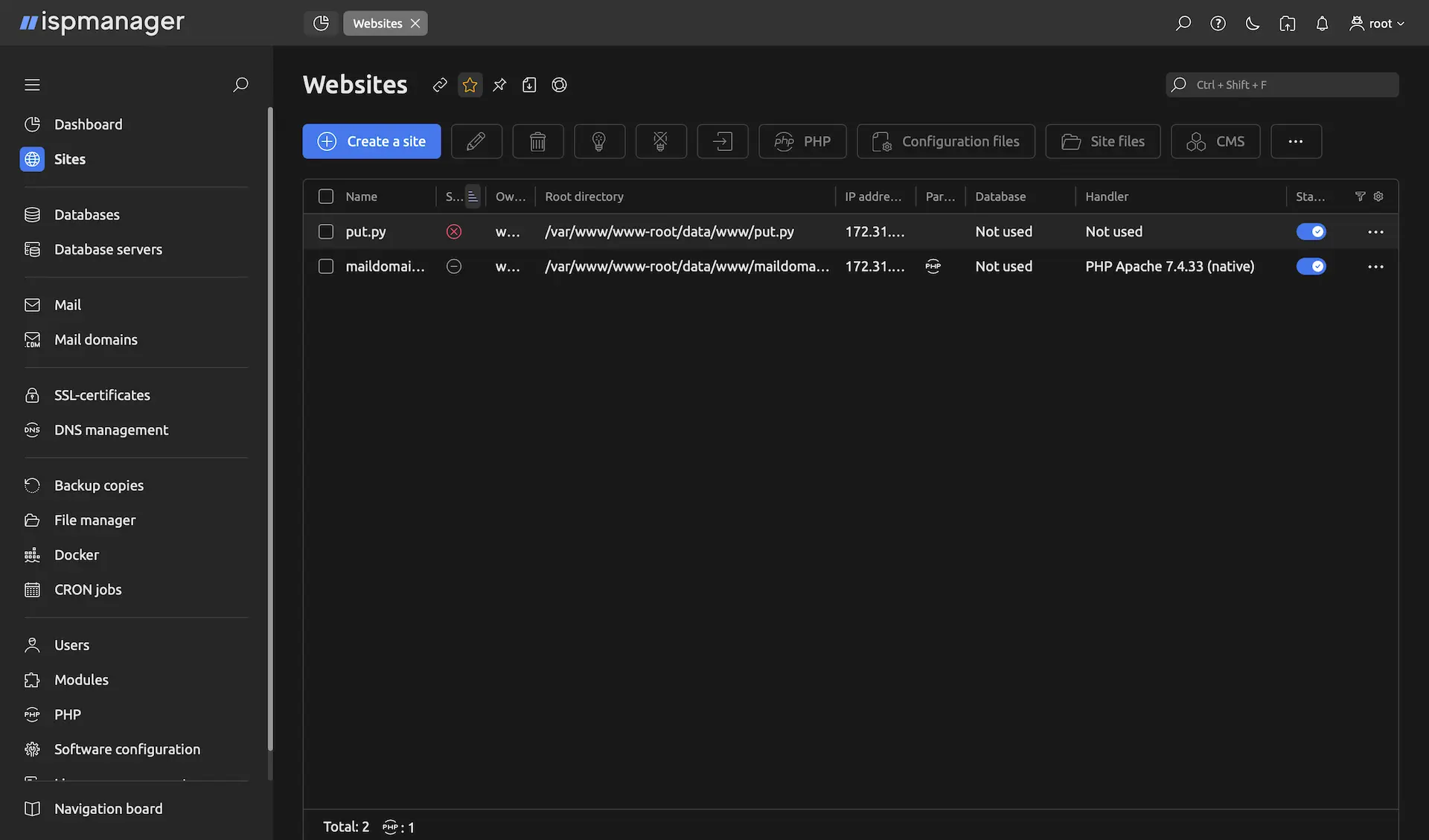
ispmanager is built around multi-site hosting. You can add domains, create websites, define document roots and manage aliases and redirects without mixing configuration between projects.
Each website is treated as its own unit. Logs, runtime settings and SSL configuration are tied directly to the site, which makes troubleshooting and maintenance significantly easier once you host more than a couple of domains.
Web server stack support
ispmanager supports the most common production web server stacks, including Apache, Nginx and OpenLiteSpeed.
This allows hosting environments to match the requirements of each project. Compatibility-focused setups, reverse proxy configurations and performance-oriented stacks can all be managed through the same interface.
PHP version management
Many hosting environments need to support multiple PHP versions at the same time. One site may rely on newer features, while another depends on older extensions.
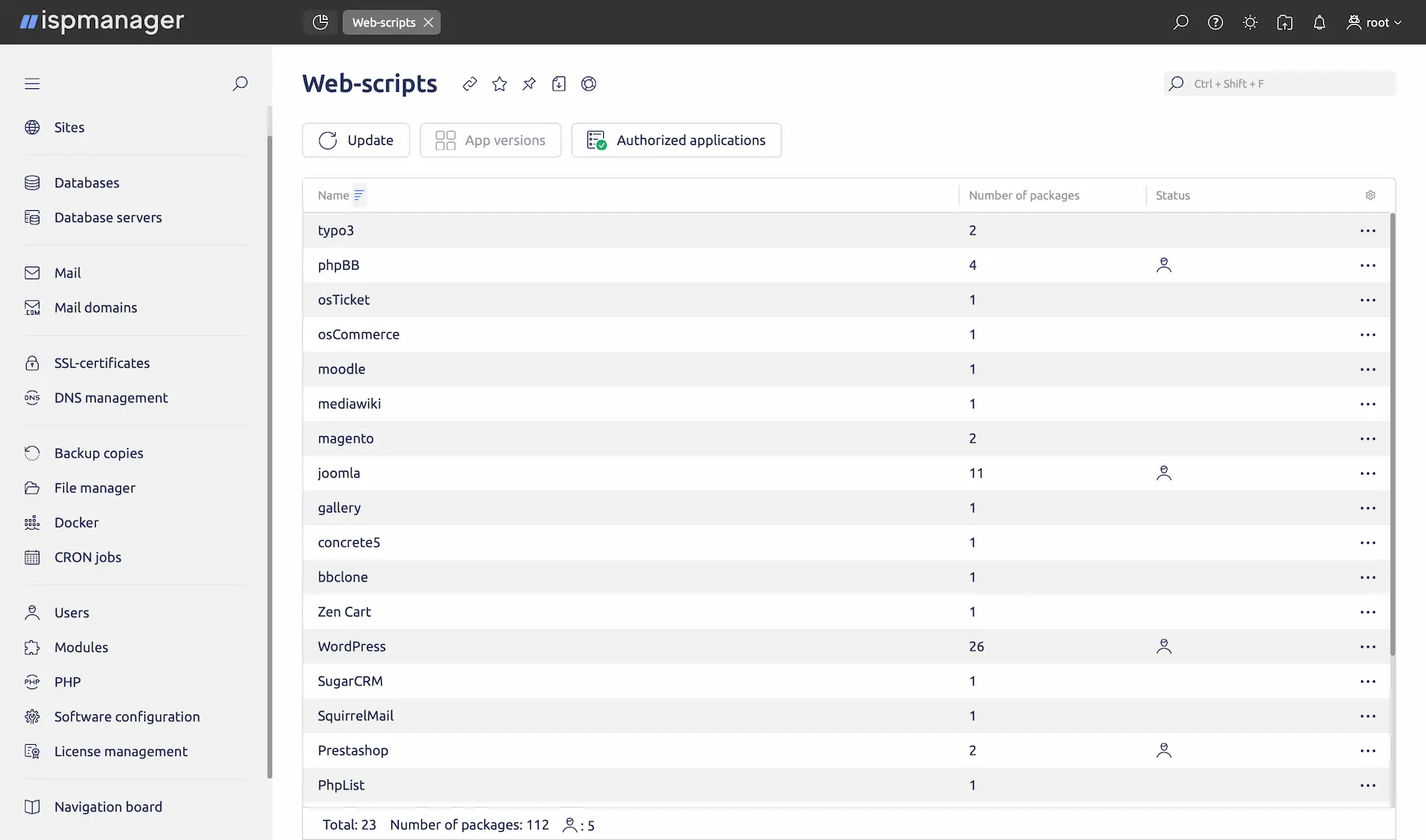
ispmanager supports multi-version PHP and lets you assign versions per website. This allows gradual upgrades and reduces the risk of breaking existing projects during runtime changes.
Support for Python and Node.js applications
Modern hosting environments often include more than traditional websites. Background services, APIs, webhook receivers and internal tools are increasingly common.
ispmanager supports Python and Node.js applications alongside classic hosting stacks, making it possible to run mixed workloads on the same VPS without ad-hoc configuration.
Database engines and management
Databases are a core part of almost every hosting setup. ispmanager supports the most widely used engines: MySQL, MariaDB, Percona and PostgreSQL.
The panel provides a central place to create databases, manage users, assign permissions and restore data when needed. This helps keep credentials organised and reduces the risk of configuration drift over time.
Email hosting and mail domain administration
Email is often the reason businesses hesitate to leave shared hosting. Mailboxes, aliases and forwards need to remain reliable and easy to manage.
ispmanager includes full mail domain and mailbox administration. It also provides practical tools such as mailbox import and basic filtering controls, allowing businesses to host email alongside their websites when required.
DNS management
DNS ties together websites, email, certificates and third-party services. ispmanager includes DNS zone management, slave server support and reserved names.
Even when authoritative DNS is hosted externally, having structured DNS tools available during migrations and service changes helps prevent common configuration errors.
SSL certificates and HTTPS management
SSL certificates need to be issued, renewed and replaced as domains evolve. ispmanager includes certificate management and supports automated workflows such as Let’s Encrypt.
Centralised visibility across certificates reduces missed renewals and helps keep HTTPS consistent across all hosted sites.
Backups and recovery workflows
Backups are essential once hosting becomes business-critical. ispmanager includes scheduled backup tools that can be used for website-level recovery and data restoration.
Combined with platform-level backups at the VPS layer, this allows for a layered recovery strategy that covers both individual projects and full server incidents.
File management and controlled access
Day-to-day hosting still involves files: uploads, configuration changes, log inspection and emergency fixes.
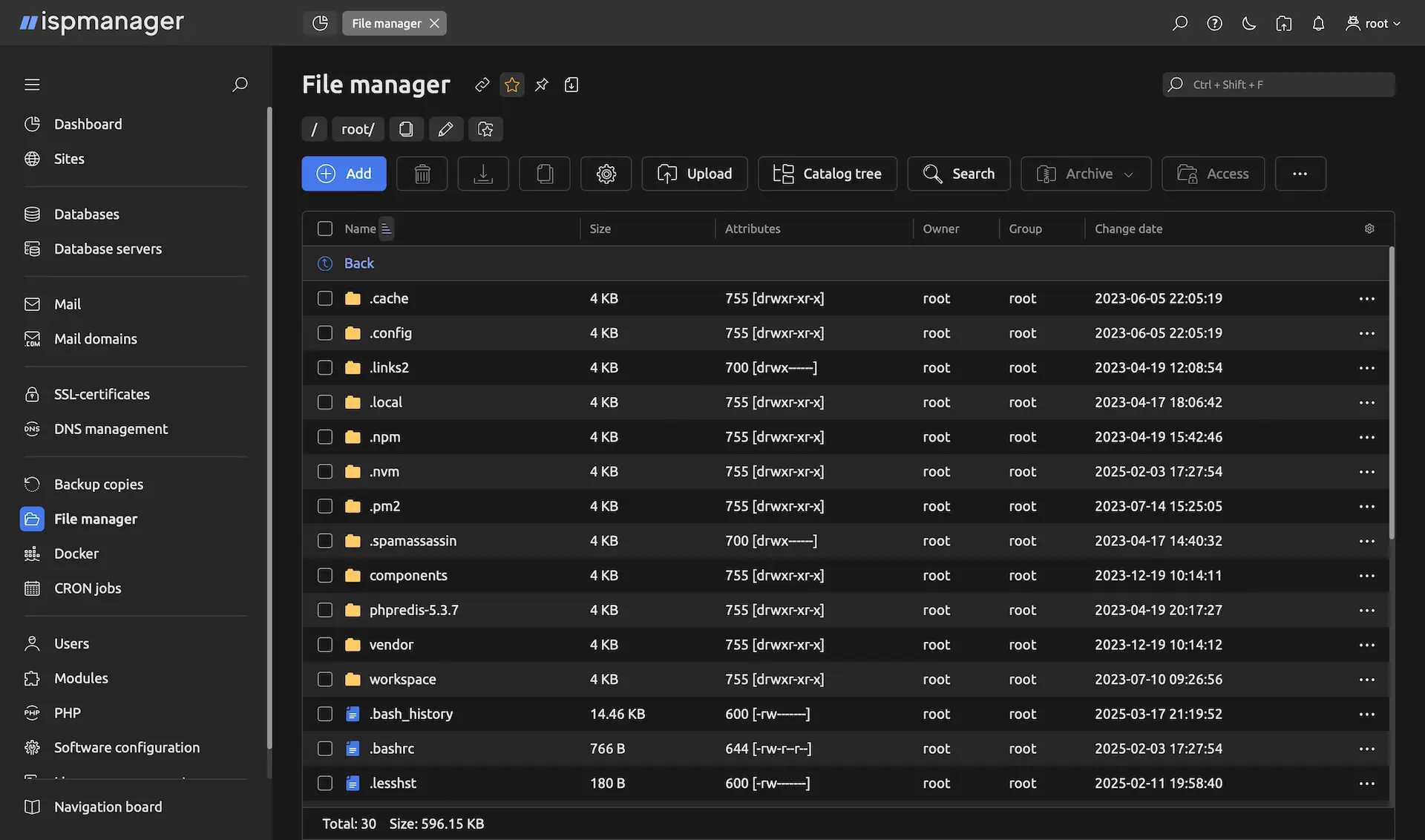
ispmanager includes a file manager and FTP user management, making it possible to grant limited access without sharing full system credentials. This is especially useful for teams, contractors and client environments.
Scheduled tasks and automation
Many applications rely on scheduled jobs for maintenance, reporting and background processing.
ispmanager provides CRON job management through the interface, keeping scheduled tasks visible and easier to audit on servers with multiple websites.
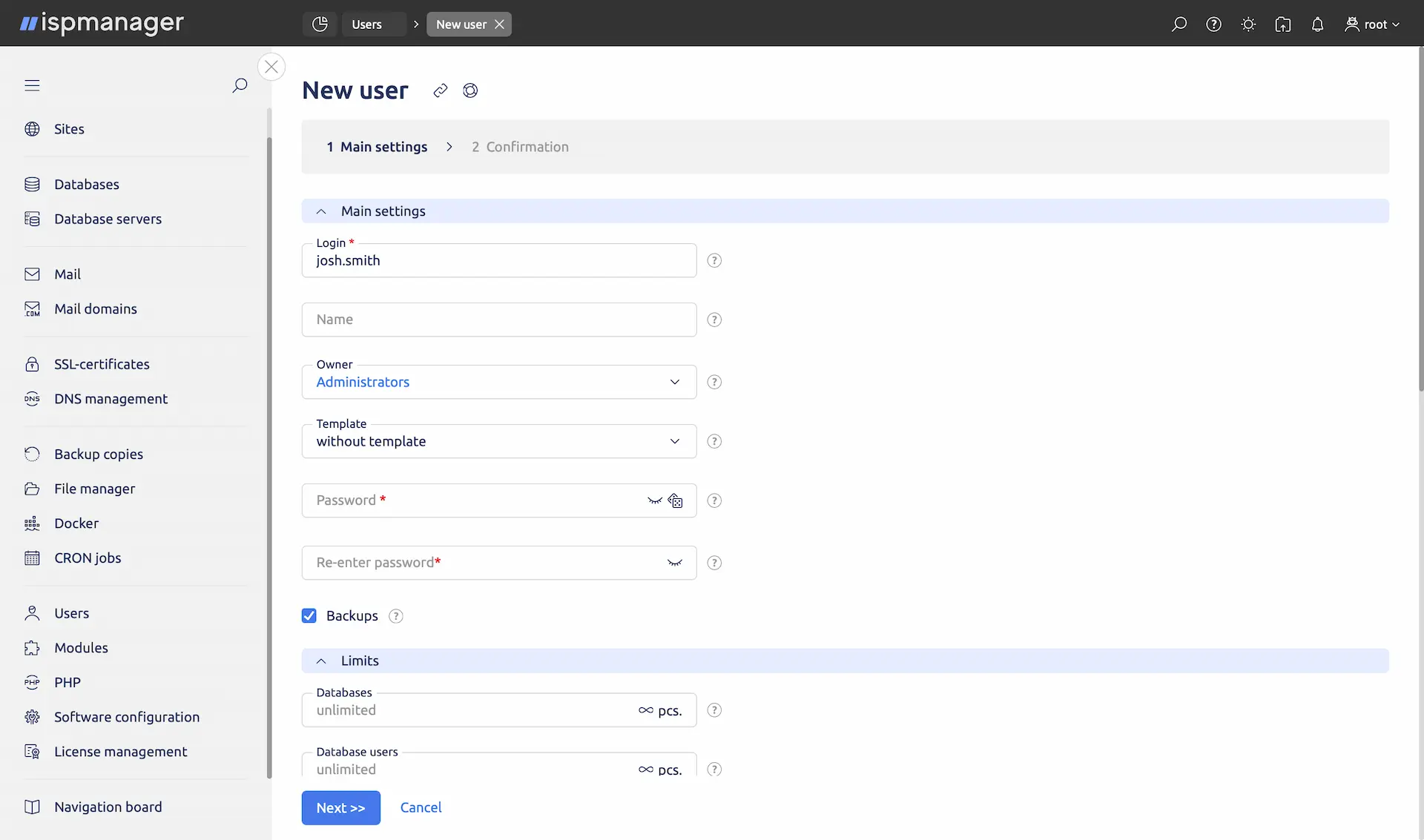
User roles and permissions
As soon as more than one person is involved, access control becomes a requirement.
ispmanager supports multiple roles including administrators, users, resellers and FTP users. This allows access to be scoped to what each person actually needs, improving security and operational clarity.
Monitoring and operational visibility
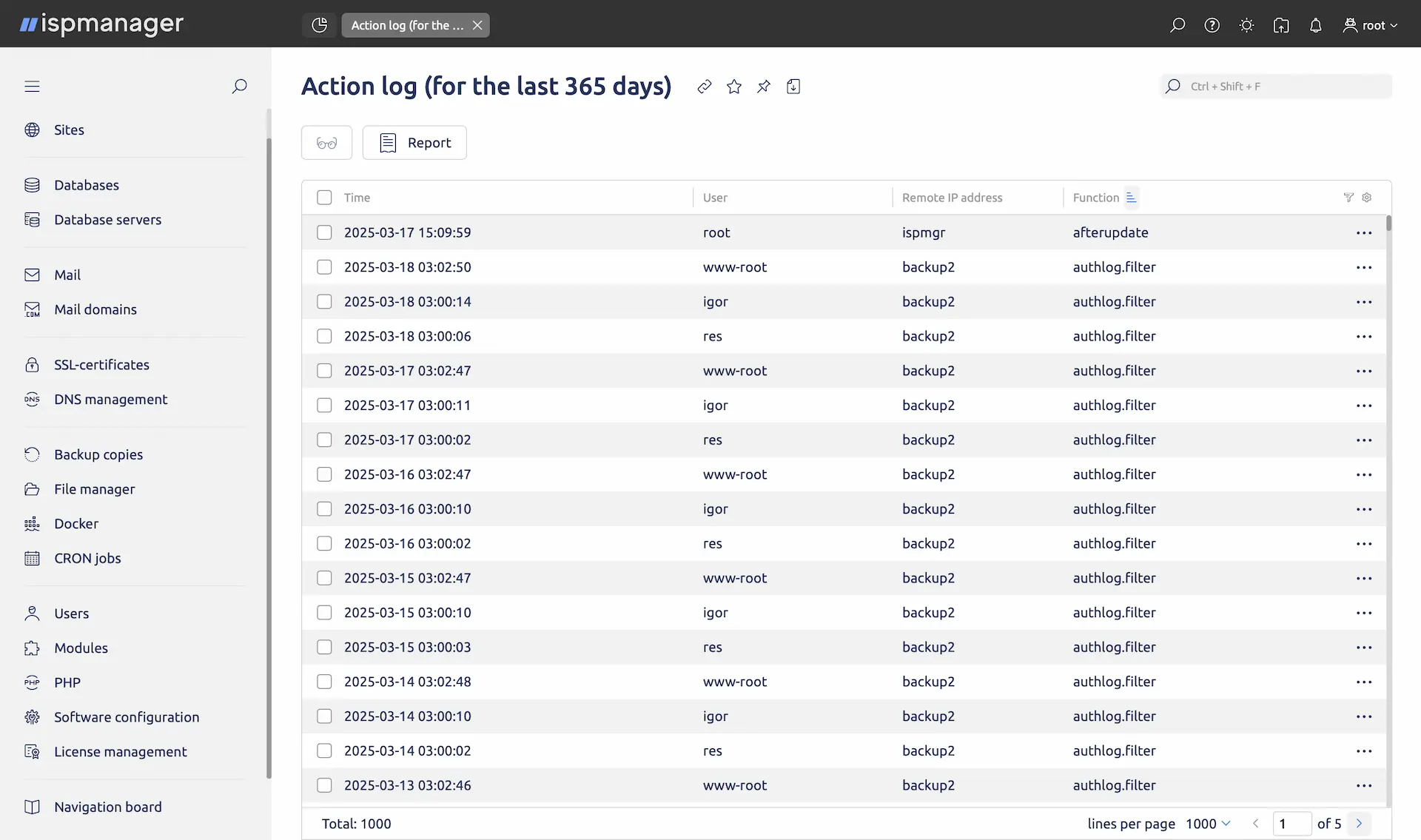
Hosting reliability depends on visibility. ispmanager provides access to request logs, access logs, action logs, background tasks and system resource information.
This makes it easier to understand what is happening on the server during traffic spikes, updates or unexpected behaviour.
Server services and system tools
ispmanager includes server-level management features such as service control, software configuration, network services, firewall tools and system information.
These tools do not replace SSH access. They provide a structured layer for common administrative tasks that need to be performed safely and consistently.
Docker support
Some ispmanager editions include Docker support, allowing containerised services to run alongside traditional hosting workloads.
This is useful for projects that combine classic websites with supporting services such as workers, APIs or internal tools.
How this fits into LumaDock’s VPS platform
ispmanager runs on top of LumaDock’s KVM-based VPS infrastructure, using dedicated virtual resources and NVMe storage. Firewall controls, DDoS protection and backups are handled at the platform level.
The result is a clear separation of responsibilities: the VPS provides performance, isolation and security, while ispmanager provides structure and usability for everyday hosting operations.
Designed for long-term use
Hosting environments rarely stay static. New sites are added, runtimes change, teams grow and responsibilities shift.
ispmanager is built for this reality. It keeps hosting manageable as complexity increases, without forcing users into rigid workflows or removing access to the underlying system.
This is why it fits naturally into LumaDock’s VPS lineup and why it is positioned as a supported, long-term option for customers who need reliable hosting without unnecessary overhead.